Five Years of Mapping an Emerging Movement — Now in One Place
We've spent five years mapping the organisations, initiatives, and thinkers working on civilisational transformation. For the first time, all of that research lives in one place.
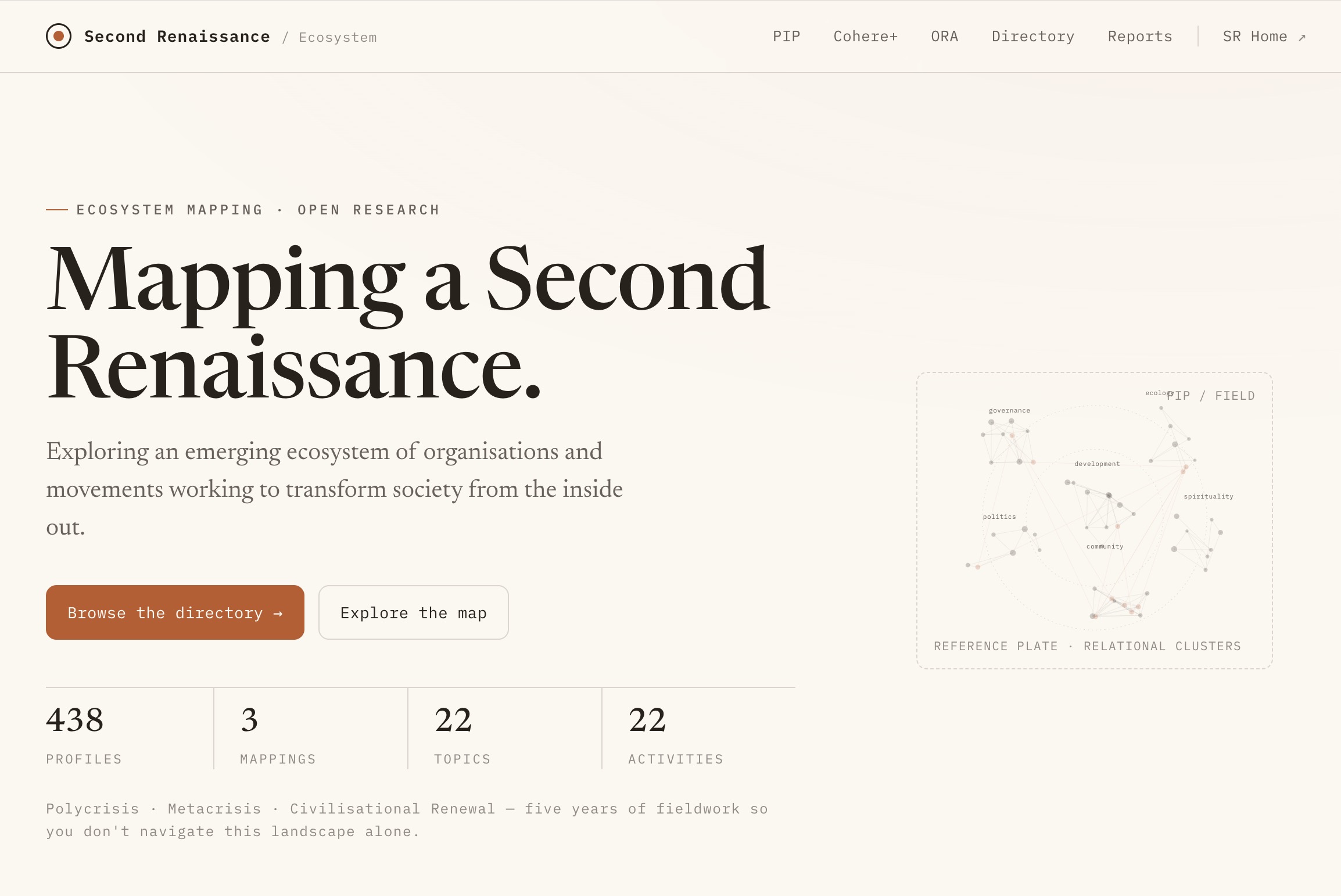
Something is happening at the edges of mainstream institutions. A loosely connected ecosystem of organisations, researchers, and practitioners is working on problems that most institutions aren’t yet equipped to face: civilisational transition, polycrisis response, the inner dimensions of systemic change. It doesn’t have a single name. It doesn’t have a headquarters. But it is real, it is growing, and it is extraordinarily difficult to navigate if you’re new to it — or even if you aren’t.
For five years, we’ve been trying to map it.
That work has produced three major research efforts: the PIP mapping (~150 organisations taking Paradigmatic, Integrated, and Pragmatic approaches to social change), the Cohere+ directory (~300 organisations in the EU transformative change ecosystem), and the ORA polycrisis mapping (over 40 organisations working on global polycrisis response, with a focus on the Global South). Together that’s over 400 profiles of people, projects, and institutions working at the edge of what’s possible.
Until now, those three bodies of research lived in scattered places — different repositories, different URLs, one of them (ORA) never published at all. Today that changes.
ecosystem.secondrenaissance.net is now the consolidated home for all of it.
Why mapping matters
Navigating this ecosystem without a map is hard. The organisations working on civilisational change and societal transformation are numerous, distributed, and often invisible to each other — let alone to funders, researchers, or curious newcomers. Ecosystem mapping makes that landscape legible: who’s working on what, where, with what theory of change, at what scale. It helps people find partners, funders identify grantees, and researchers understand the field as a whole. For a deeper take on why we map, see Mapping for Emergence on the Life Itself blog.
What’s inside
The PIP Mapping
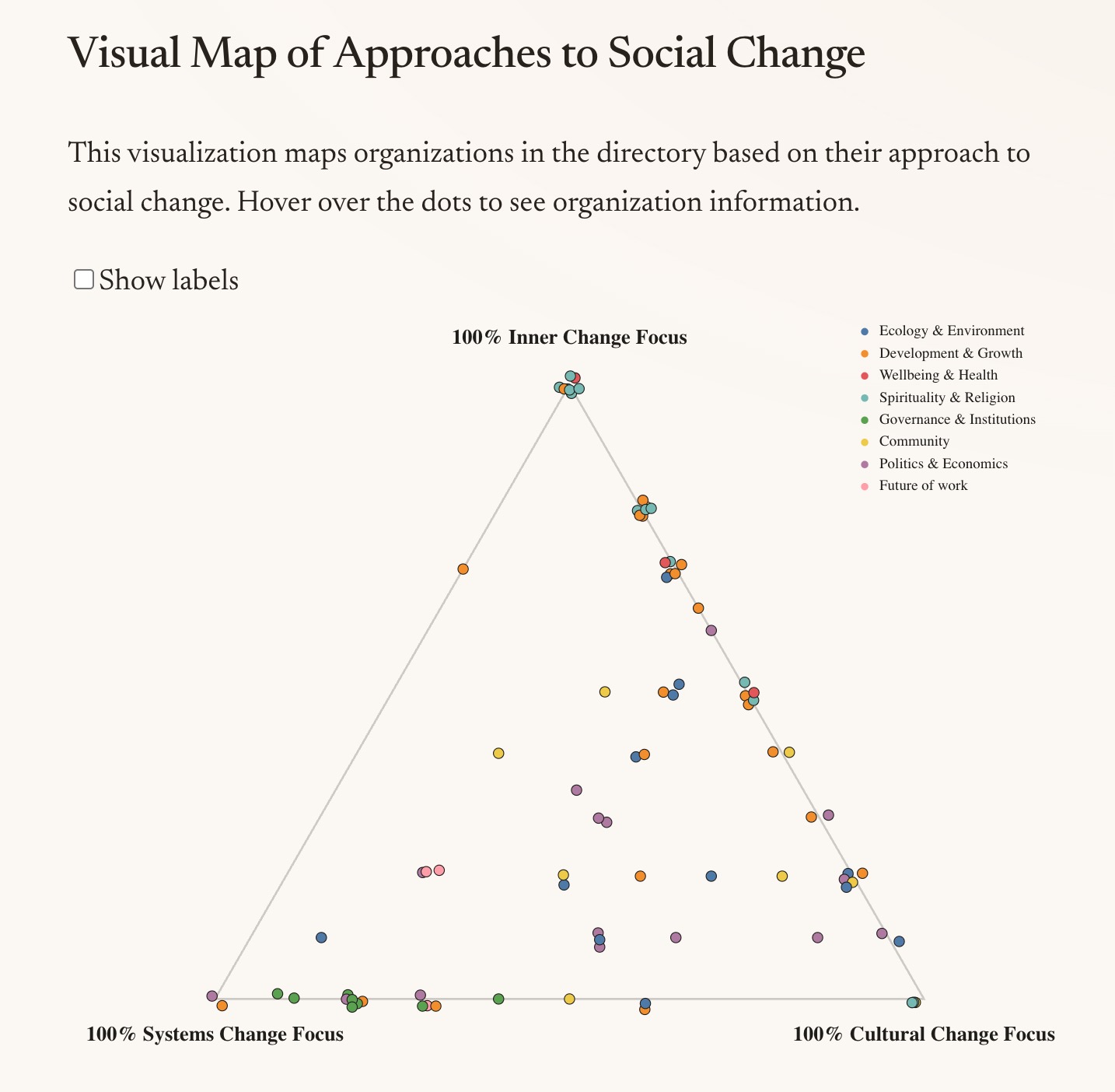
The PIP research is the most developed: a full analytical essay at /pip/ with two interactive visualisations embedded in context — a CircularVis plotting organisations by topic, and a TernaryPlot mapping the full set against the three dimensions of the PIP framework (Paradigmatic, Integrated, Pragmatic). The directory at /pip/directory/ lets you browse and filter all profiles.
The Cohere+ Directory
~300 profiles of projects and organisations compiled for the EU-funded Cohere+ project, with a focus on the European transformative change ecosystem. It’s the largest of the three collections and the one most oriented toward practitioners and organisations already embedded in the European funding landscape. Browse it at /cohere/directory/.
The ORA Polycrisis Directory — newly published
The ORA directory is being published alongside this update. Over 40 organisations working on polycrisis response, with particular depth on the Global South — the part of the landscape most underrepresented in Western-centric ecosystem surveys. Read more about it here, or go straight to /ora/directory/.
A redesign built for research
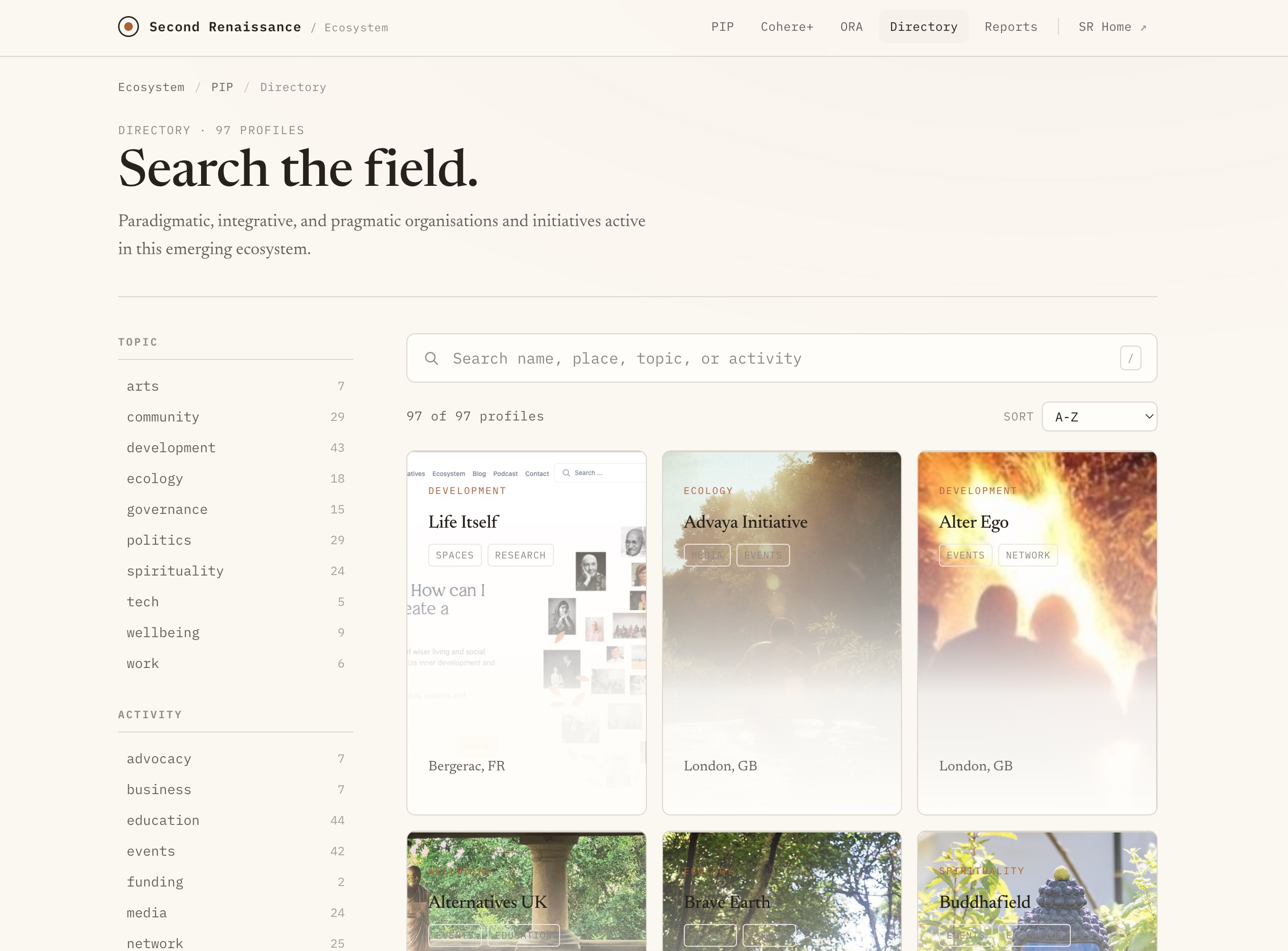
The site has been rebuilt from the ground up — not just reskinned. The most visible change is the overall aesthetic: a warm, editorial feel built around long-form reading and research, with a typographic system and colour palette that keeps the content in focus rather than the chrome.
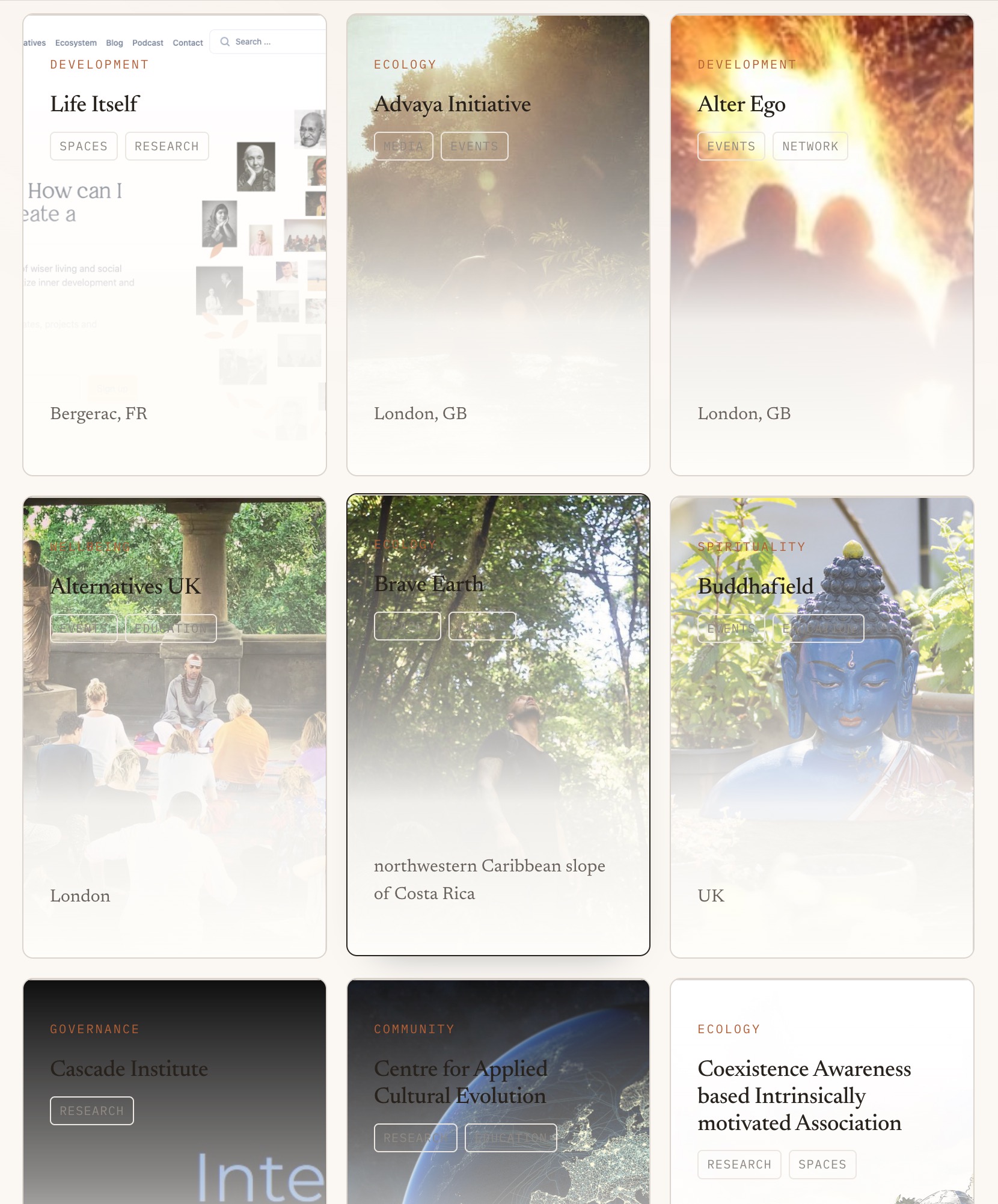
But the bigger improvement is in how the directories work. The old experience was a flat list. The new one is a proper research interface: sticky filter facets by topic, approach, activity type and region; full-text search; result counts; and a responsive card grid that surfaces profile imagery where it exists and falls back gracefully where it doesn’t. Browsing 300 Cohere+ profiles or 150 PIP profiles is now actually usable.
Why it took five years and a consolidation effort to get here
Ecosystem mapping is slow work. Each project required building relationships, gathering data, developing a framework, and then making editorial decisions about what to publish and how. The PIP mapping took the better part of two years. ORA was completed in 2023 but sat unpublished because the infrastructure to present it well didn’t exist yet.
The technical situation didn’t help. The research lived in multiple repositories, some of it inside a larger codebase, some in spreadsheets, none of it in one place a reader could land and explore.
The consolidation proposal we wrote in May 2025 (read it here) framed the question simply: how do we make five years of work actually accessible? The answer was a dedicated site, a clean technical foundation, all three mappings migrated in, and a design that treats the research as worth presenting properly. What’s now live at ecosystem.secondrenaissance.net is that answer.
What’s next
The site is live and the research is accessible, but there’s more to do:
- ORA profiles: a number of ORA entries are stubs — we’ll be completing those over the coming months
- Cohere+ visualisation: the interactive network map from the original Cohere+ project needs to be restored
- Unified search: a single index across all three mappings so you can search the full 500-profile corpus at once
If you use the site, find errors, or want to contribute to the research, the repository is on GitHub. All the profile data is in plain markdown — readable, editable, forkable.
ecosystem.secondrenaissance.net is maintained by Life Itself as part of the Second Renaissance project.